Agroforestry in Peru

Madre de Dios, Peru
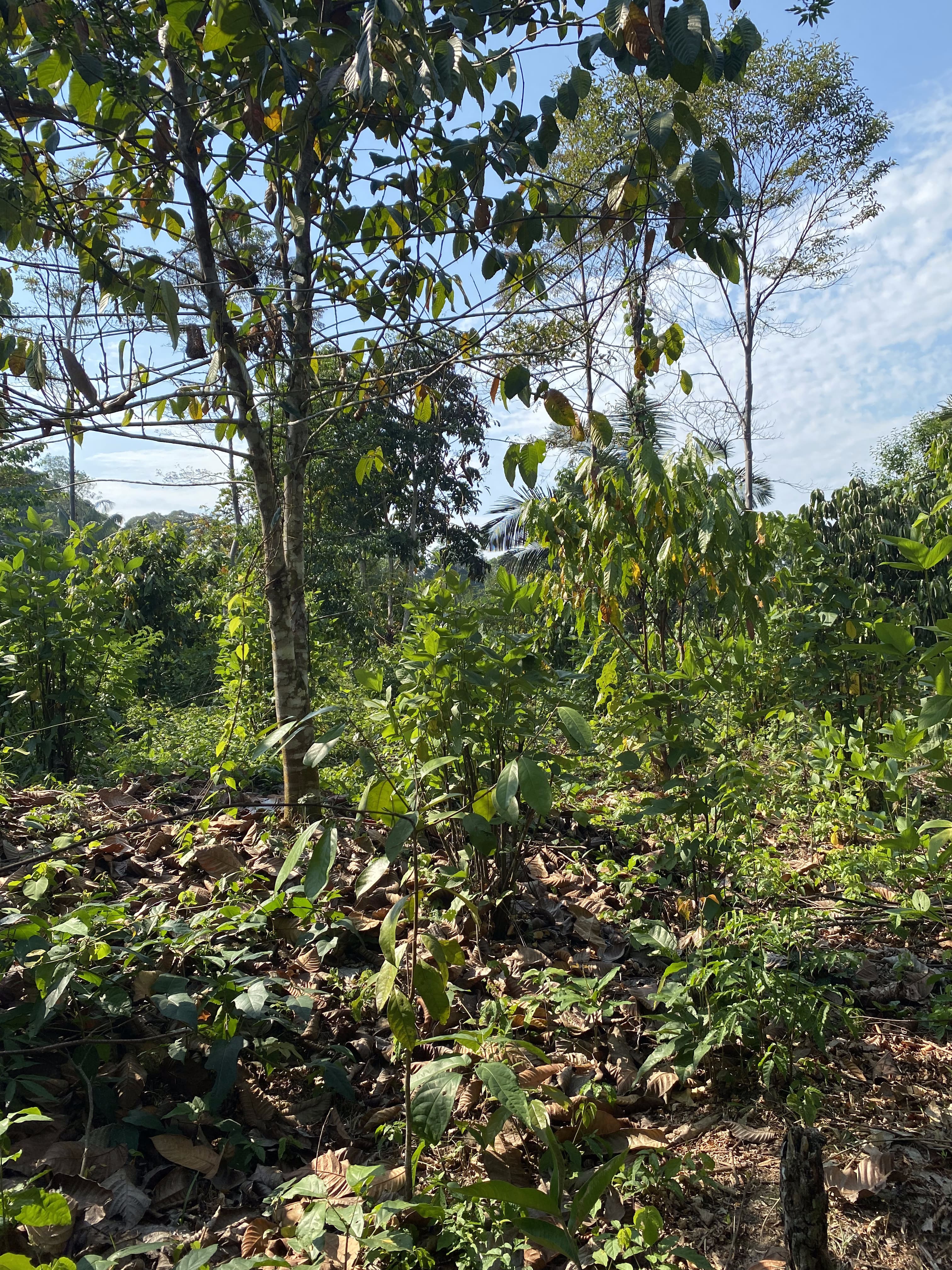
In Peru, the agroforestry project in cooperation with Camino Verde focuses on successional agroforestry (farming with trees). In successional agroforestry, you take into consideration not only the physical dynamics of a forest's shape (how trees grow with each other compatibly in space) but also the importance of the factor of time when designing your agroforestry system. Different species appear in the system (or disappear from the system) at different times. For example, in many successional agroforestry systems, annual or short-lived peren...Read more
10587
trees planted
5293.50
tonnes of CO₂
absorbed during lifetime

Location

Facts & figures

Operations

Operations

Operations

  • The project is operated on the ground by our technical partner Camino Verde

  • 3 seed centers produce over 100 native tree species annually, with a combined capacity of 200,000 seedlings a year.

  • Seedlings pass through several stages: germination beds, transfer to bags, and a gradual move to more light-exposed areas, since young plants are initially too sensitive to direct sunlight and their leaves can burn, similar to their natural shaded conditions in the forest. After roughly a year, depending on the species, they are planted on site

  • Agroforestry systems are designed with both spatial and temporal dynamics in mind: how trees grow together compatibly in space, and how different species enter or leave the system over time

  • Short-lived annuals such as maize and bananas are planted early on and later harvested or removed, with the resulting gaps replanted with new, longer-lived trees such as Brazil-nut

  • Shade-loving species like cacao and huasaí are planted later, under the established canopy of trees planted at the system's start

  • Collaboration with universities supports ongoing research

Socio-economic impact

Socio-economic impact

Socio-economic impact

  • Livelihood creation through agroforestry activities, alongside extra income-generating activities

  • A distillation area produces essential oils from species such as rosewood, mandarin, copaiba, lima limon and cedron, generating additional income

  • Beekeeping with stingless bees provides both ecological and economic benefits, including honey production and multiple-purpose use

  • Employment for over 20 Amazonian staff and 2 community promotors

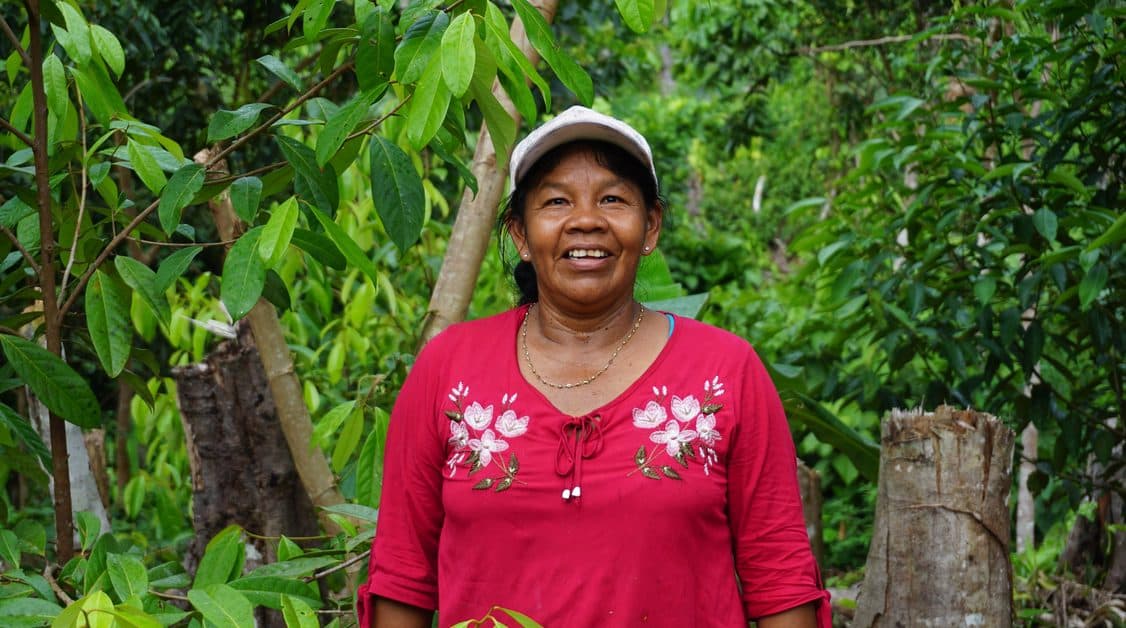
  • Empowering Indigenous women through paid internships in tree nursery management

  • Planting hundreds of Amazonian medicinal tree and plant species, enhancing local access to traditional remedies

  • Strong focus on education, including building an open-source knowledge base on native plant species to share more widely

Ecological impact

Ecological impact

Ecological impact

  • Protecting and restoring the Amazon rainforest through active reforestation and forest conservation, with a direct impact area of 334 hectares

  • Over 400,000 trees planted, spanning more than 400 native species (including the reforestation activities)

  • Increased biodiversity, with beekeeping using stingless bees acting as natural pollinators, improving plant genetics through cross-pollination from other areas and helping create a more resilient forest.

  • Improved soil and water regulation, as diverse forest cover supports natural water retention and reduces erosion

1 No poverty
3 Good health and well-being
5 Gender equality
8 Decent work and economic growth
13 Climate action
15 Life on land

Specific sites

Agroforestry in La Joya (Peru), 2021-2026

The La Joya site hosts our technical partner's largest tree nursery, supplying seedlings to farmers, native communities, researchers, NGOs, government projects, and the local municipality for urban tree planting in Puerto Maldonado. La Joya produces over 100 tree species each year, with capacity for 100,000 seedlings at a time. It is also the main ...Read more

Partners