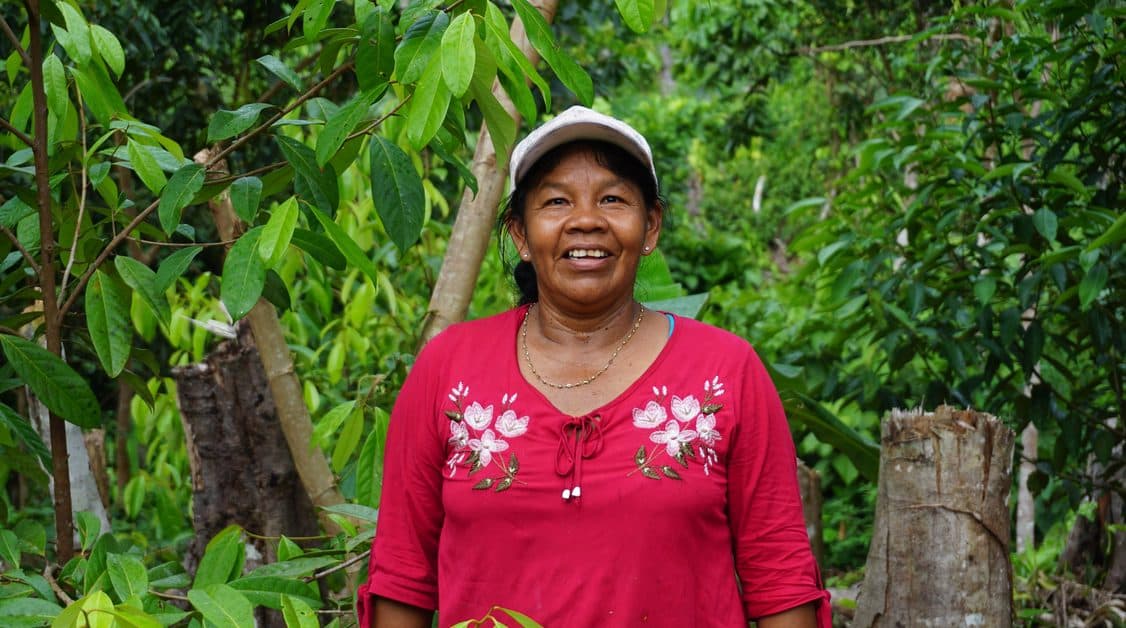
Community-based agroforestry in Peru

Loreto, Peru
In Peru, the community-based agroforestry project run in cooperation with Camino Verde focuses on partnering with indigenous communities in Peru's largest region to build diverse agroforestry systems and regenerative supply chains for endangered species. The agroforestry project is active in 8 native communities along the same river. Every year, planting occurs mainly in one principal campaign, which can take place late in the year (Nov/Dec) or early in the year (Jan/Feb/March). The timing depends entirely on river conditions, which affect acce...Read more
13252
trees planted
6626.00
tonnes of CO₂
absorbed during lifetime

Location

Facts & figures
Operations

Operations

Operations

  • The project is operated on the ground by our technical partner Camino Verde

  • Planting takes place on community-owned land

  • 3 seed centers produce over 100 native tree species annually, with a combined capacity of 200,000 seedlings a year.

  • Seedlings pass through several stages: germination beds, transfer to bags, and a gradual move to more light-exposed areas, since young plants are initially too sensitive to direct sunlight and their leaves can burn, similar to their natural shaded conditions in the forest. After roughly a year, depending on the species, they are planted on site

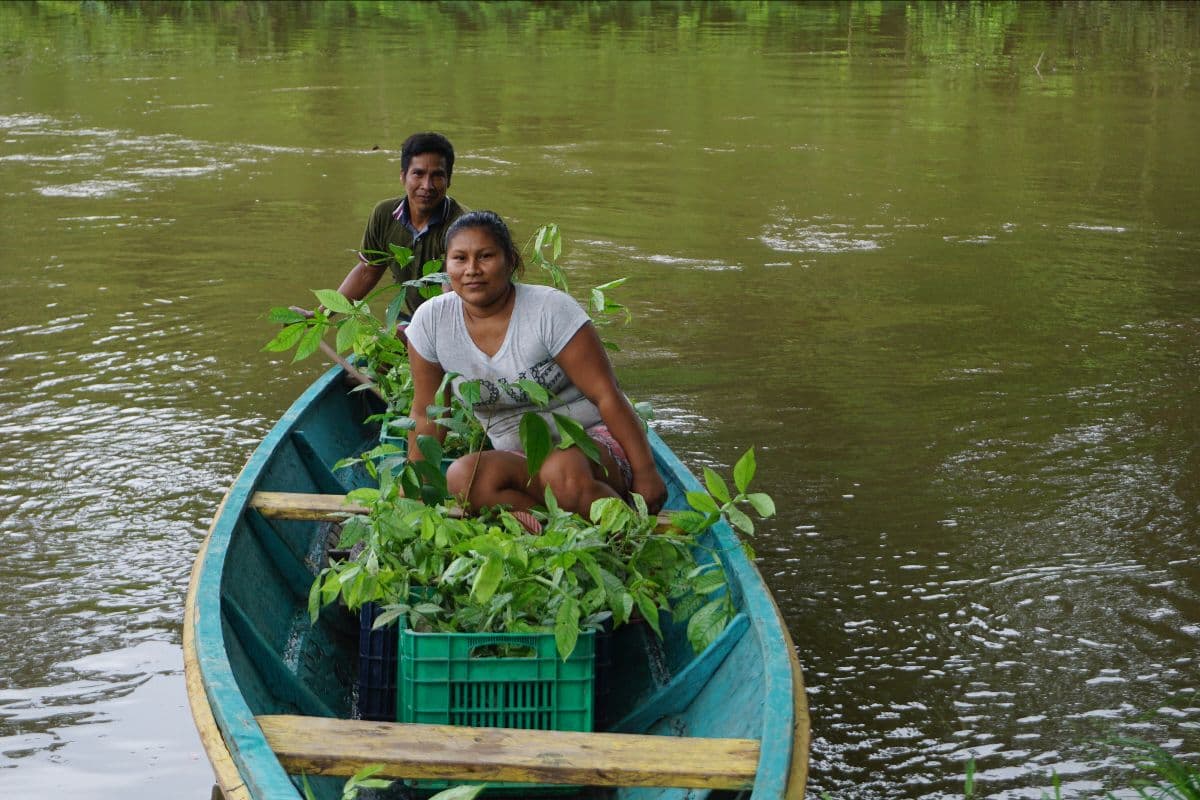
  • Seedlings are transported by navigating the river to reach participating families in remote communities

  • Planting season runs from October to March, also depending on river levels for accessibility

  • Agroforestry systems are designed with both spatial and temporal dynamics in mind: how trees grow together compatibly in space, and how different species enter or leave the system over time

  • Community members carry out the planting itself, while our technical partner provides additional guidance, training, hands-on workshops and field visits to monitor planting progress

  • Collaboration with universities supports ongoing research

Socio-economic impact

Socio-economic impact

Socio-economic impact

  • Supporting regenerative livelihoods for 180 families across 12 Indigenous Amazonian communities

  • Communities have complete ownership over the agroforestry systems established on their land

  • A distillation area produces essential oils from species such as rosewood, mandarin, copaiba, lima limon and cedron, generating additional income

  • Beekeeping with stingless bees provides both ecological and economic benefits, including honey production and multiple-purpose use

  • Employment for over 20 Amazonian staff and 2 community promotors

  • Empowering Indigenous women through paid internships in tree nursery management

  • Strong focus on education, including building an open-source knowledge base on native plant species to share more widely

Ecological impact

Ecological impact

Ecological impact

  • Agroforestry systems established with these communities are centered around the endangered rosewood

  • Over 400,000 trees planted, spanning more than 400 native species (including the reforestation activities)

  • Increased biodiversity, with beekeeping using stingless bees acting as natural pollinators, improving plant genetics through cross-pollination from other areas and helping create a more resilient forest.

  • Improved soil and water regulation, as diverse forest cover supports natural water retention and reduces erosion

1 No poverty
2 Zero hunger
3 Good health and well-being
5 Gender equality
8 Decent work and economic growth
11 Sustainable cities and communities
13 Climate action
15 Life on land

Specific sites

Agroforestry in Loreto (Peru), March 2026

Between January and February 2026, our technical partner in Peru organized a large-scale plant distribution in the Amazon. A total of 9,934 tree seedlings, sponsored by Go Forest clients, were delivered to 5 communities of the Ampiyacu River Basin. The agroforestry systems established with these communities are centered around rosewood (Aniba rosa...Read more

Partners