Reforestation in the Democratic Republic of Congo

Ingung Kapia, Democratic Republic of Congo
Together with our field partner Faja Lobi, Go Forest works hand in hand with local communities through a bottom-up approach to realise large-scale reforestation projects. By planting native species on degraded soils, we actively restore biodiversity while creating meaningful employment for local people through manual planting work. Our approach goes beyond simply planting trees. By combining reforestation with social projects and agroforestry, we build strong and lasting relationships with local communities. Their long-term stewardship is what...Read more
76861
trees planted
23058.30
tonnes of CO₂
absorbed during lifetime

Location

Facts & figures

Socio-economic impact

Socio-economic impact

Socio-economic impact

  • Strong emphasis on sustainable regional development

  • Providing decent work opportunities, with an average of 2,500 people employed

  • The local population is involved across all value chains, from A to Z. By being challenged to be entrepreneurial, the motivation behind their actions shifts from day-to-day survival to long-term benefit

  • A zero-deforestation agro-industry, combining charcoal production from biomass manioc with agro-industrial processing of manioc and palm oil, aims to create 5,000 additional sustainable jobs. A micro-electricity plant further supports local energy needs.

  • Quality education supported through scholarships, ICT training and academic partnerships, reaching 8,000 students per year. This includes a university campus, offering 35 scholarships a year, an ICT training center with 30 laptops welcoming school classes and external students, weekly radio sensitization and more than 200 internships annually

  • A botanical garden and visitor center featuring 475 local tree species hosts educational class visits

  • Village communities and clans are formal members of Faja Lobi, ensuring local ownership and representation, with each village having its own women's group.

  • A medical center and diagnostic laboratory have been established to support the local population

  • The economic model also includes poultry and pig farming, fish farming and beekeeping, further diversifying income opportunities for local communities

Operations

Operations

Operations

  • The project is operated on the ground by our technical partner Faja Lobi

  • All activities take place in Idiofa, combining sustainable regional development with the aim of long-term autonomy, in respect for nature

  • The long-term focus lies on well-thought-out forest management

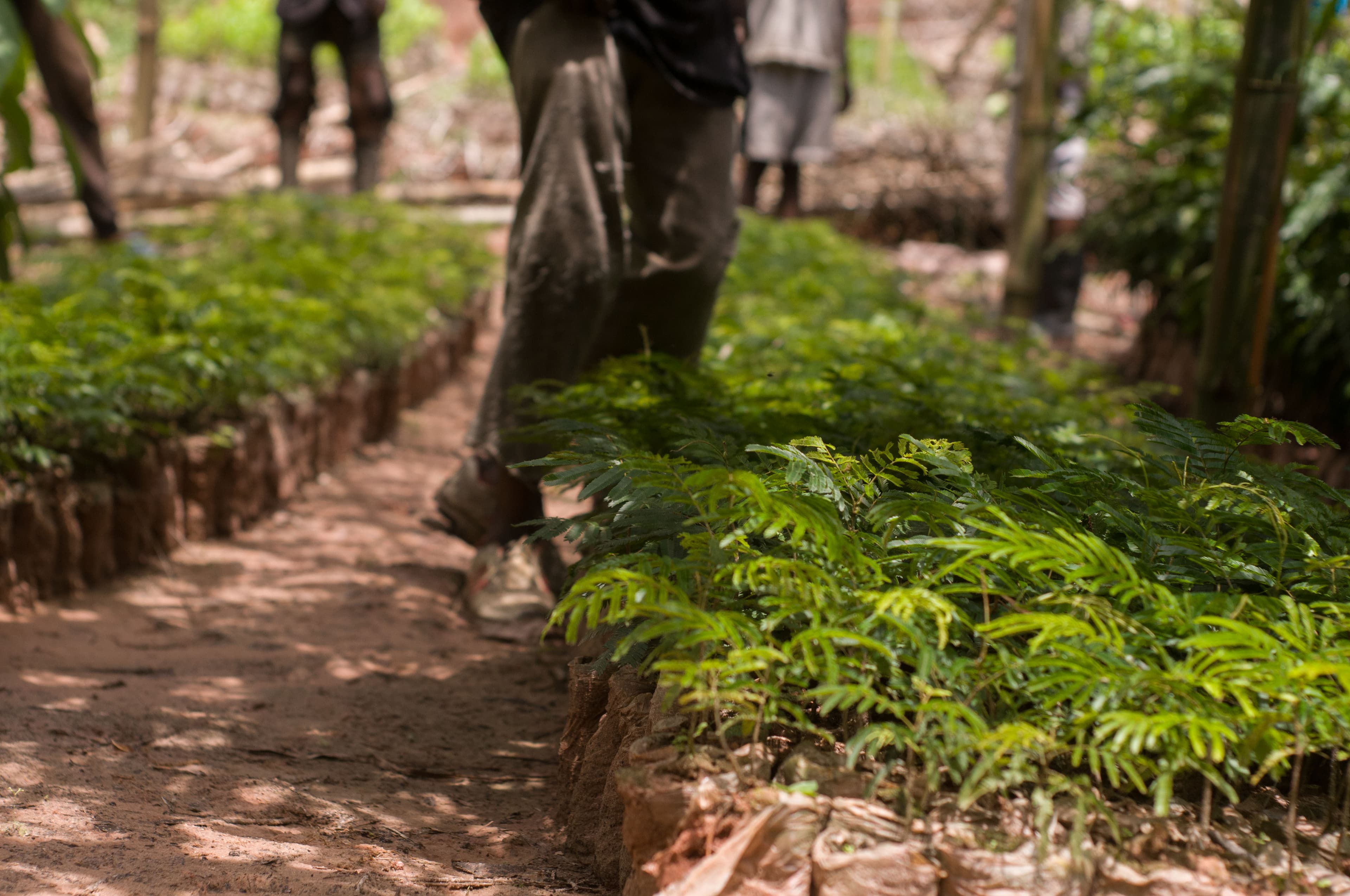
  • Local nurseries have been set up and are run with the local population, supplying saplings for reforestation

  • Planting season runs from September to May

  • Species planted include trees such as Millettia laurentii, Pericopsis elata (afromosia), Pentaclethra macrophylla, Ceiba pentandra, Milicia excelsa and Ricinodendron heudelotii, alongside a mix selected by role: fast-growing pioneer trees for early ground cover, legume-based species to improve soil quality, fast-growing local forest species, and slower-growing established forest species suited to shaded conditions, alongside species sown directly in the forest

  • Land-use plans are developed for all 24 villages in the project, jointly agreed with local authorities, distinguishing family farming, economic farming, protected forest and existing natural forest

  • Collaboration with universities in Belgium and DRC supports both academic exchange and applied forestry research

Ecological impact

Ecological impact

Ecological impact

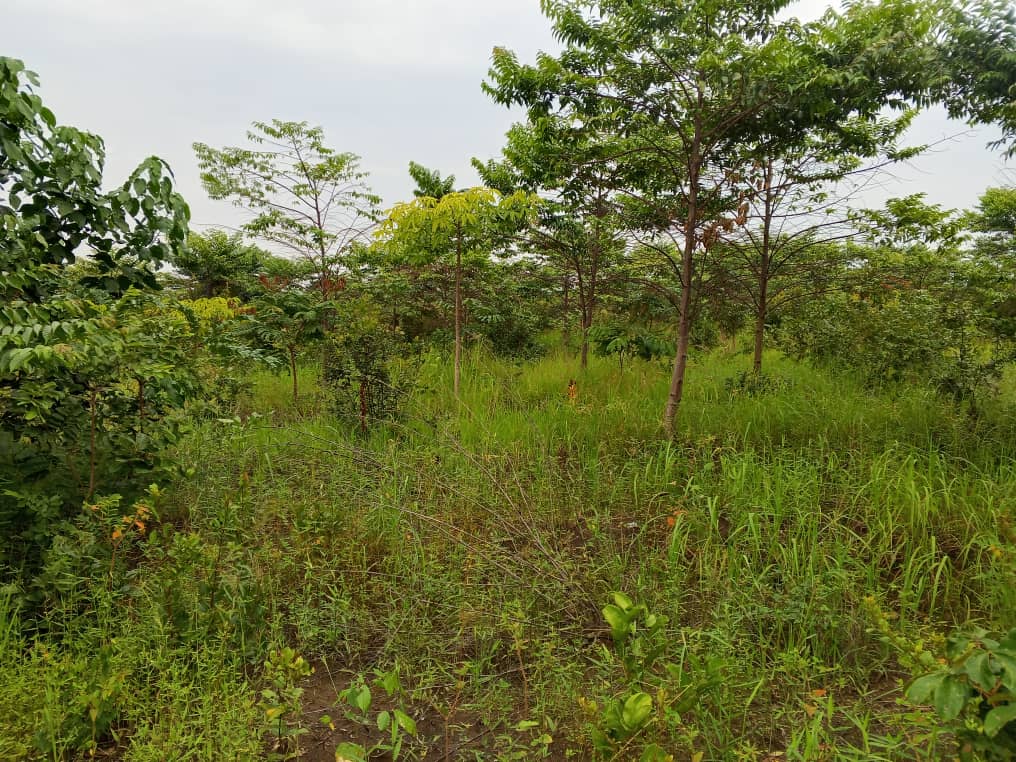
  • The project restored over 10,000 hectares to date, mainly using local tree species, with 78 species planted

  • The trees are planted on degraded soils near the savannah highlands of Idiofa to restore biodiversity and prevent desertification

  • Biodiversity in the Idiofa site is increasing markedly, with regular sightings of antelope, squirrels and pangolins, and numerous bird species including the palm-nut vulture, African eagle and Turaco

  • Erosion control measures include dikes, water diversion and cascading retention structures, with grass cover and retention pits helping to slow sand movement and improve water infiltration

  • Fire calendars and regulations are developed jointly with local authorities

  • Long-term vision to restore 50,000 hectares of forest, combined with sustainable socio-economic development and education

1 No poverty
2 Zero hunger
4 Quality education
8 Decent work and economic growth
13 Climate action
15 Life on land
17 Partnerships for the goals

Specific sites

Reforestation in Ingung Kapia (DRC), 2022-2024

In Ingung Kapia, in the Democratic Republic of Congo, we plant native tree species on degraded soils to restore biodiversity and create meaningful employment for local communities through manual planting work. Since we began in 2022, our reforestation program has taken on the challenge of restoring the natural environment and preventing further des...Read more

Reforestation in Ingung Kapia (DRC), 2025-2026

In Ingung Kapia, in the Democratic Republic of Congo, we plant native tree species on degraded soils to restore biodiversity and create meaningful employment for local communities through manual planting work. Our reforestation program has taken on the challenge of restoring the natural environment and preventing further desertification of the regi...Read more

Partners