Within the Cunsey Beck catchment, at Great Ore Gate in Lake District National Park (UK), this new project is regenerating and restoring a mature mixed woodland that has been very severely damaged by both a recent hurricane (November 2021) and infection with Ramorum larch disease ( June 2021).
**The project**
That's why from January to March 2024, ...Read more
Within the Cunsey Beck catchment, at Great Ore Gate in Lake District National Park (UK), this new project is regenerating and restoring a mature mixed woodland that has been very severely damaged by both a recent hurricane (November 2021) and infection with Ramorum larch disease ( June 2021).
**The project**
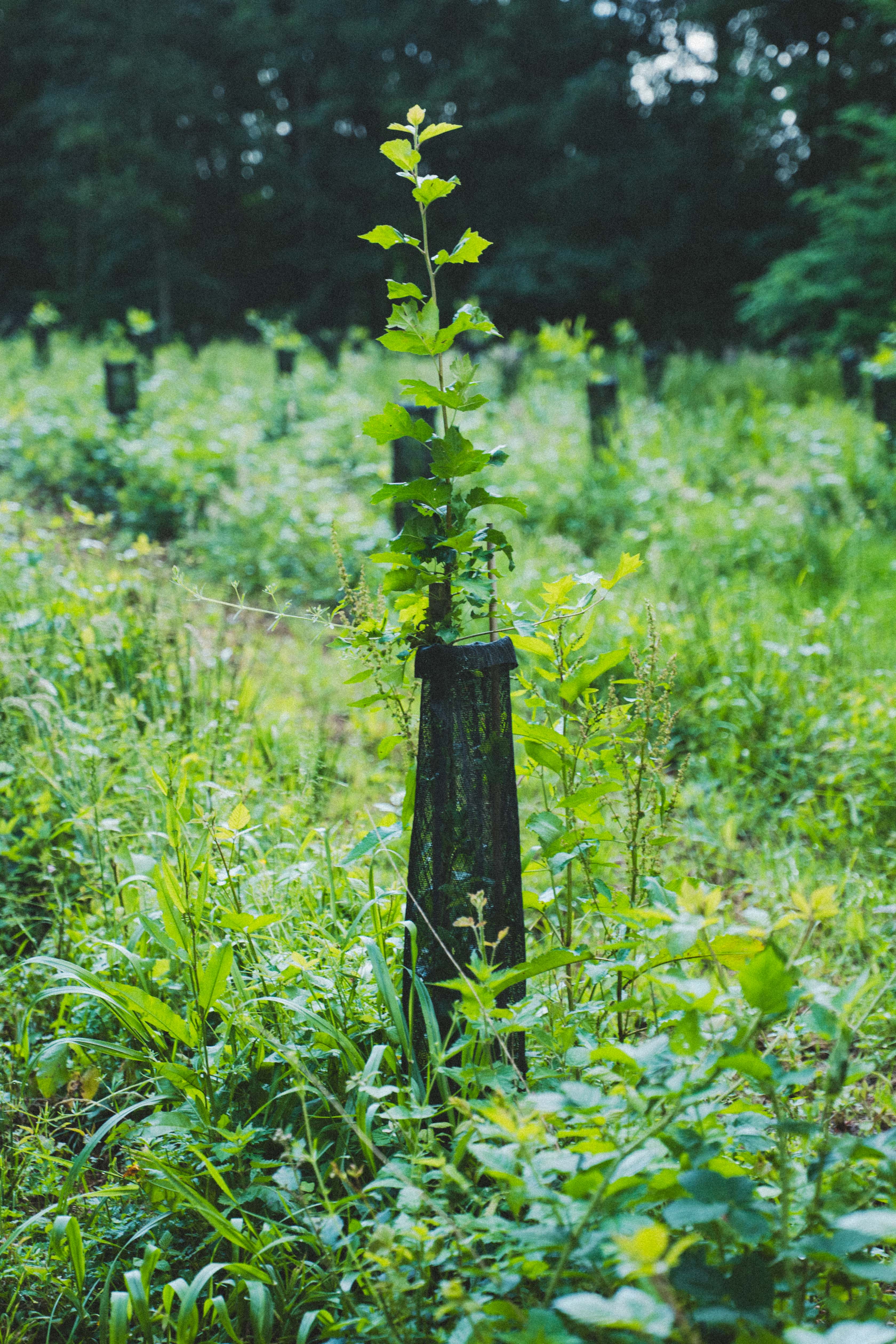
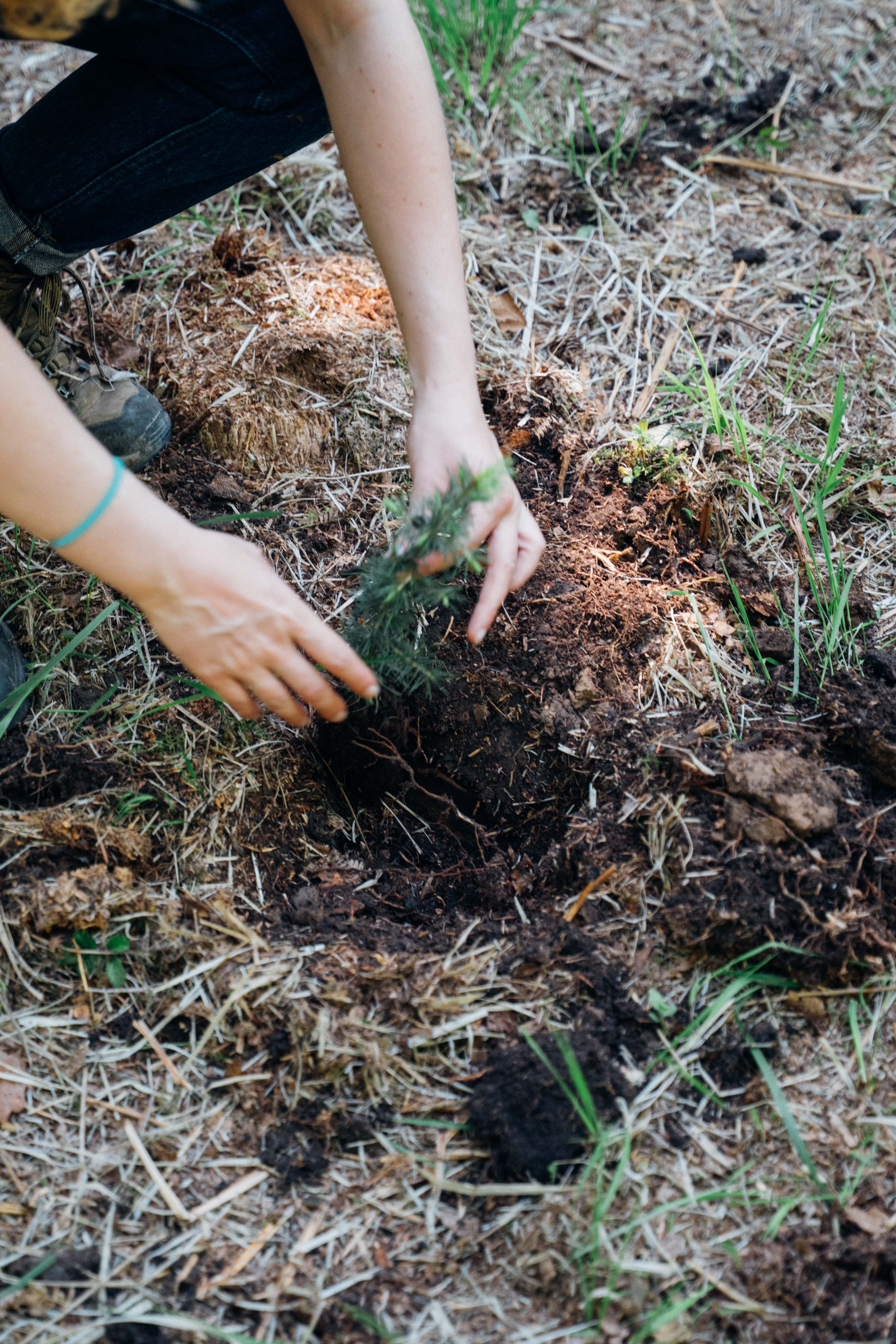
That's why from January to March 2024, tree planting and natural seeding in combination with 'back-to-nature' forestry systems help to regenerate the forest and preserve and protect the soil. ‘Back-to-nature' forestry (or silviculture) systems consist on the application of a sustainable silviculture system, using approaches in forest management that, to a greater extent than in the past, take into account natural dynamics in forest management. Thus, applying silvicultural operations that imitate natural dynamics (such as promotion of natural regeneration) or restoring the forest to a structure and composition that more closely corresponds to its natural form (such as from an artificial monospecific forest to a more diverse forest with native species ).
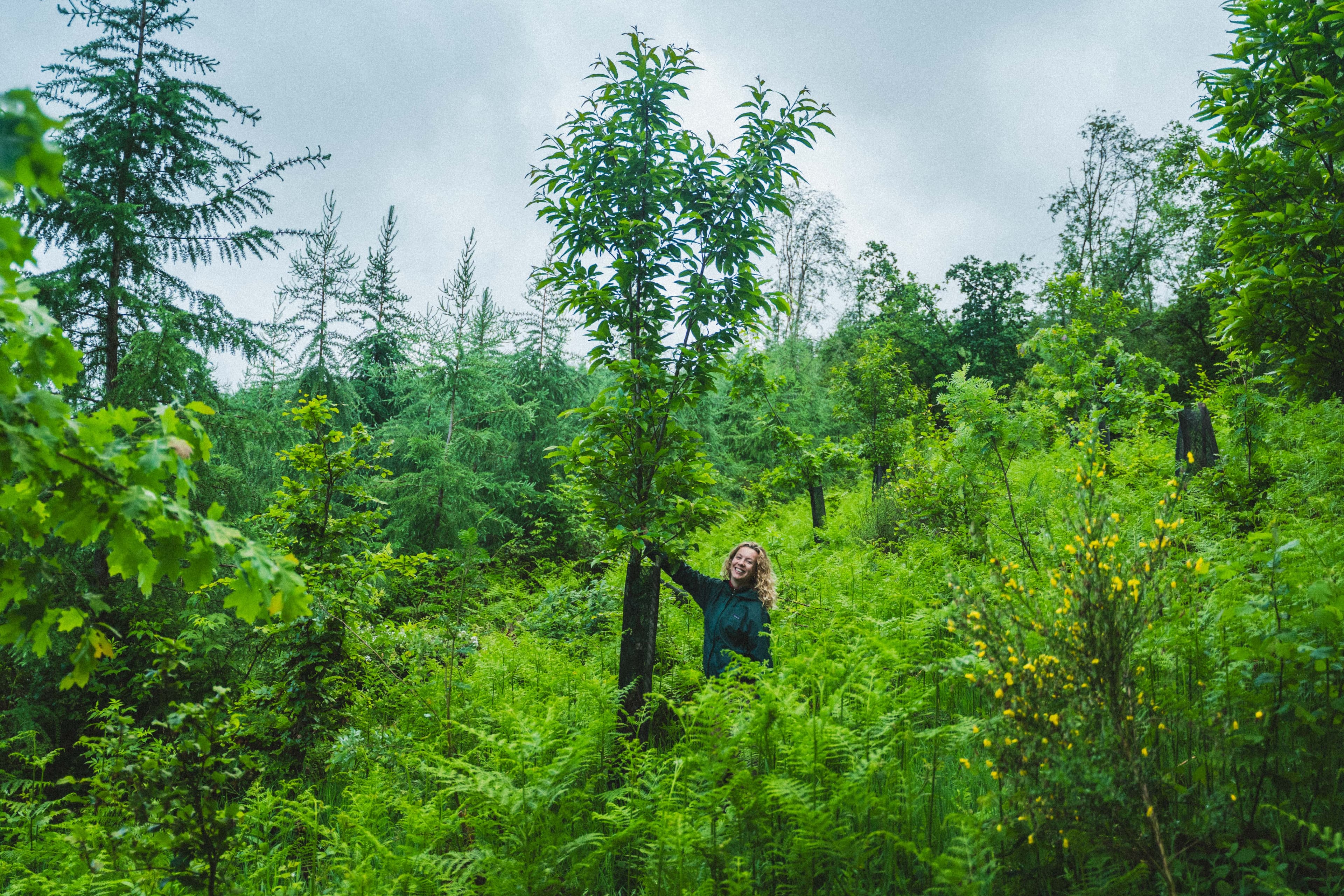
Next to the river, larch had to be felled because of larch disease Phytophthora ramorum. The larches were removed and care was taken not to damage the young pole-stage oaks and other hardwoods that were growing amongst them - you can see these in the photos; they have been underplanted with shrub species to improve the habitat. New trees are mainly planted in gaps where the sick trees were felled and treated with TRICO as game protection.
In total, 3320 trees of the following tree species were planted:
68,68% sessile oak
9,64% wild cherry
9,64% hazel
4,82% beech
4,82% hornbeam
1,5% viburnum opulus
0,9% sorbs torminalis
Photos of other features nearby in the woodland; retained deadwood habitat, the bluebells are just coming out in to flower now, and the network of wet flushed areas in this wood is also just coming alive.
**Impact on the Cunsey Beck water catchment**
The project is strongly related to the theme of water, not only because of its location (close to the Cunsey Beck River), but also because of the natural flood management techniques employed (to avoid flooding) and the network of ponds and wetlands in the woodland areas. A natural flood management technique is the installation of natural-based solutions such as leaky dams and brash filter dams built from logs and branchwood, therefore with sustainable material.
**Impact on biodiversity and wildlife**
By planting a forest consisting of many different species, this project will not only provide a refuge for the wildlife already sighted in the area but also a source of nutrition, which will create a positive cascade effect on the ecosystem, resulting in an increase in biodiversity in terms of flora and fauna. In fact, already several species of fauna were recently photographed by a camera trap in a nearby forest, one kilometer away, in this same valley. Wild animals include the osprey, red kite (which nests in the wood on the other side of the field), goshawk, red squirrel, fox, badger, skunk, otter, barn owl, and tawny owl, kingfisher, and marten. Therefore, the restoration of the forest ecosystem with an increase in tree species will provide a new habitat where they can find food and shelter, allowing these species, and potentially others, to move from one area to another.
Plantation updates:
- Planting date: Trees were planted in January 2024.
- 3,320 trees planted: The plantation consists entirely of native broadleaved trees and shrubs: 2,280 sessile oak (69%), 320 wild cherry (10%), 320 hazel (10%), and 160 beech (5%), along with other native shrubs (Hornbeam, Viburnum opulus & Sorbs torminalis). Trees were planted as cell-grown stock in inverted mounds at a density protected with Trico game repellent.
- Monitoring summary: A follow-up conducted in March 2025 recorded a recovery rate of approximately 90%, with the overall health of the site assessed as good. Minor biotic damage was observed, with around 10% of trees showing light browsing by red and roe deer. No climatic damage was reported. Biodiversity is well supported by wet flushes, natural streams, deadwood, and gravel sorting, with natural regeneration of hazel, holly, birch, and Douglas fir underway (to be retained to increase diversity). A pair of buzzards was also spotted on site.
- Maintenance: Weed control has been carried out manually, targeting bracken, grasses, and invasive honeysuckle, along with ongoing deer culling and Trico repellent application. Losses have been addressed through a replanting of 80 sessile oaks in autumn 2024. Manual and mechanical clearance, game protection, and repellent treatments are all planned to continue over the next months.
)
)
)